



This is the first year the Tuesday Targets are scored in public. We are still testing which exit rule fits each kind of trade and each level of risk, so the wins, the losses and the percentage above can change a little after the fact. One change today: the EWZ long call of October 27 had been carried without a stop. It now follows the rule of every other bought option, closed when two thirds of the price paid is lost. That happened on November 5, so it counts as a loss of 66 percent on its stake. Last week this line read 29 won, 14 lost, +42%. Once the rules are settled, they stay.

What Is an Iron Condor. An iron condor is four options in one order: you sell a put and a call near the price and buy one of each further out as insurance. You keep the credit if the fund stays between the short strikes, and the insurance fixes the worst case in advance.
Enter all four legs as one order at the mid, net credit, day order. A few cents less credit is fine to get filled.
The Setup
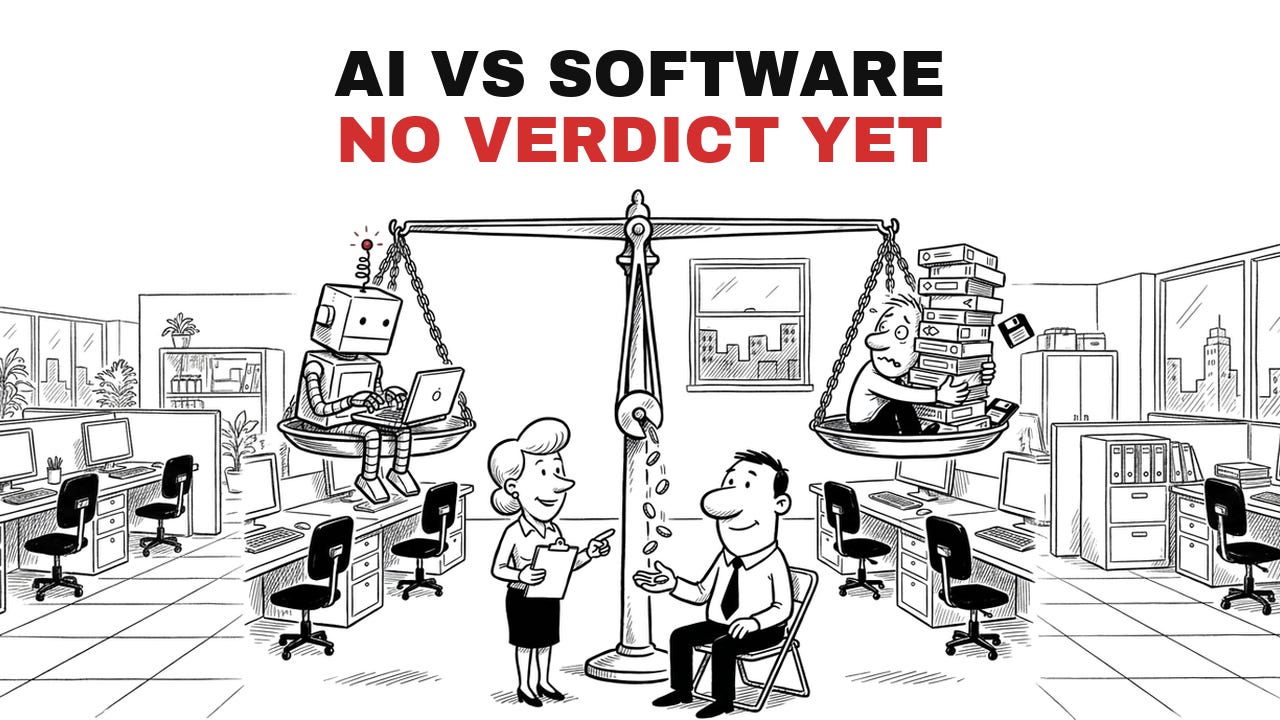
Software is the stock market's open question. For most of this year investors have worried that AI will make traditional software less necessary. The fear has a nickname, the SaaSpocalypse. Then it turned into a rout. ServiceNow fell 27 percent in one session after its report on October 28, its worst day ever. Salesforce lost 25 percent in four weeks. IGV, the fund that holds the big software names, closed Monday 15 percent under its October high.
The other side has a case too. Salesforce's chief Marc Benioff has called the software bears dead wrong, and his stock trades at about 17 times expected earnings against an average of about 28. Nobody knows yet who is right. So I sell an iron condor into January. It leans slightly bearish: it wins most if software goes nowhere or drifts a little lower, and has less room on the upside. That suits you if you already own plenty of tech.
Where You Win, Where You Lose
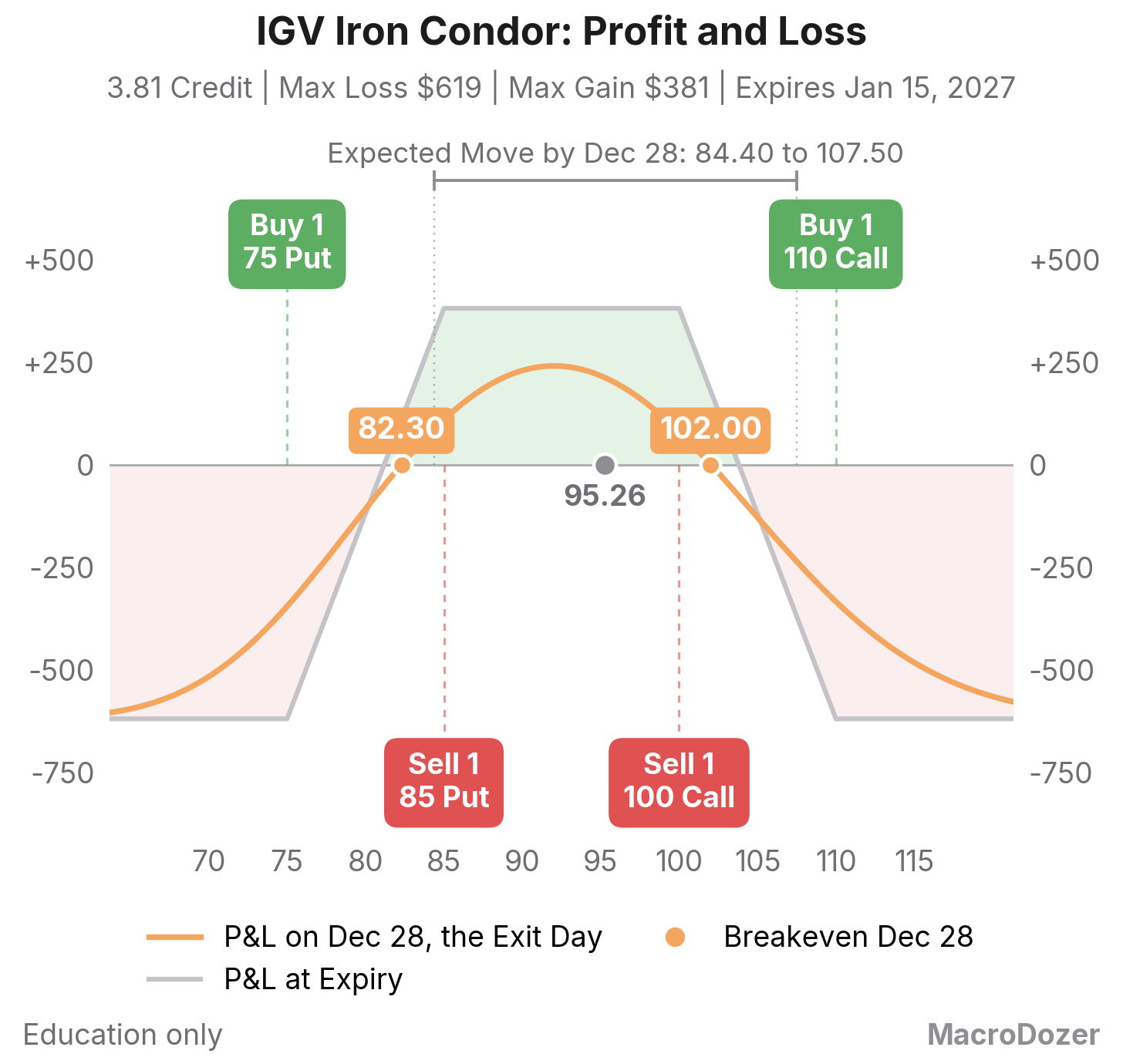
IGV iron condor, 3.81 credit: the grey line is the profit or loss at expiry, the orange curve on Dec 28, the exit day, with breakevens at 82.30 and 102.00. Max loss $619, max gain $381 per contract.
What you are betting. You are betting that IGV stays between the two break-evens until December 28, about 14 percent below Monday's close to 7 percent above. The plan takes the profit at a quarter of the credit, about 15 percent on the money at risk.
When we are wrong, and what we do then. The story breaks if the argument is settled fast: strong reports that carry software above the upper break-even, 7 percent up, or a new rout below the lower one, 14 percent down, before December 28. Two thirds of the stake is where I stop. The exit rule: the profit is taken when a quarter of the credit is earned; else out by Dec 28, 18 days before expiry, not later. Earlier when the loss reaches two thirds of the max loss, or when the reason for the trade breaks.
The Chart
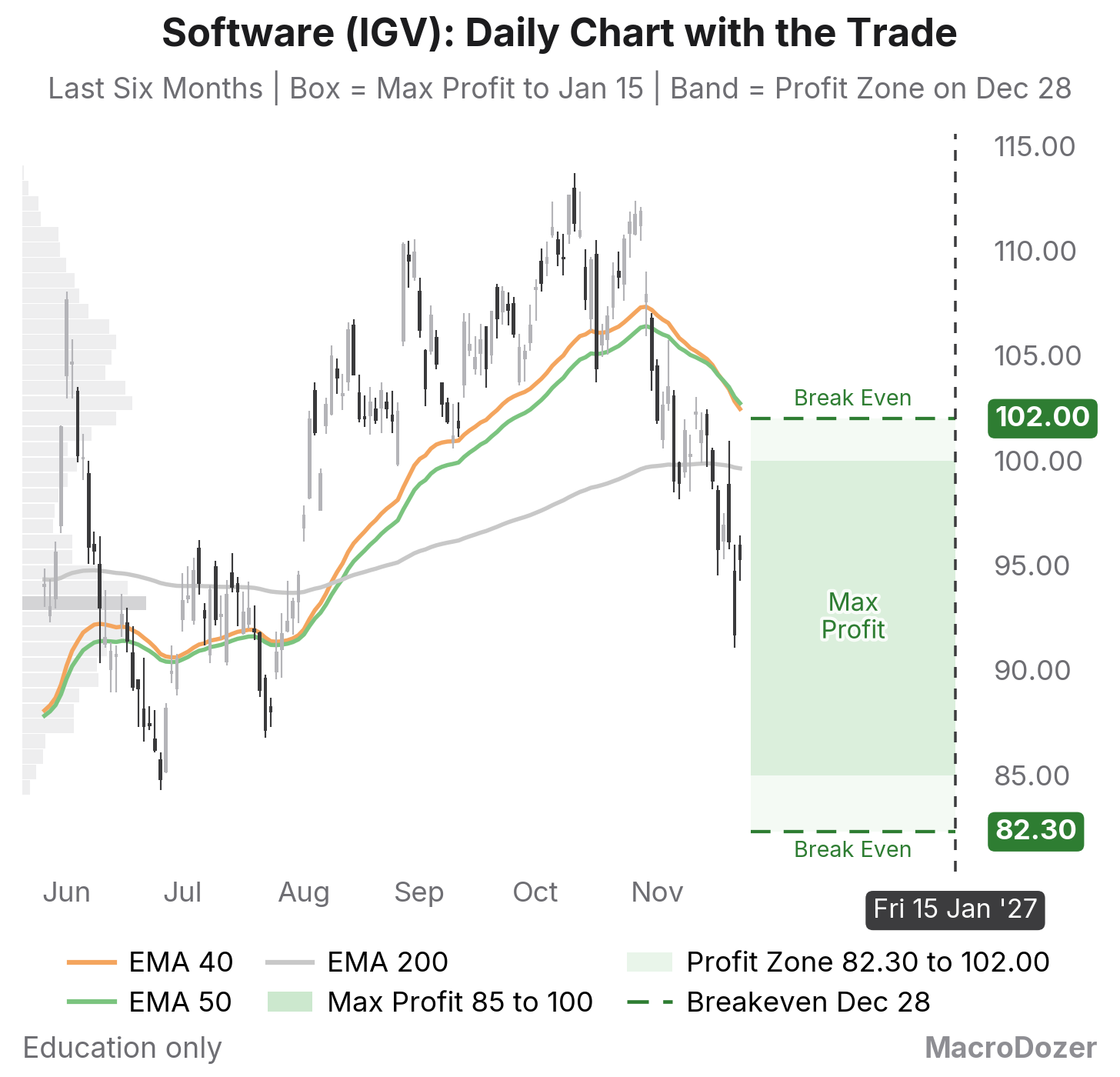
Software (IGV), daily candles over six months with the 40, 50 and 200 day averages. The box is where the whole credit is kept, the band between 82.30 and 102.00 is the profit zone on Dec 28.
Trend: down 10 percent this year and 15 percent under its October high after a six-week slide, under its 40, 50 and 200 day averages (EMA40, EMA50 and EMA200 as drawn).
Levels: the upper break-even sits above the 200 day average and just under the 40 and 50 day averages; the lower break-even sits under the November low, at a price IGV last closed below in April.
The Big Picture
The big houses disagree about Monday's bounce. Morgan Stanley's Mike Wilson told clients to add risk and called it the fat pitch. Goldman Sachs's prime desk counts hedge funds at their lowest net exposure in five years, fuel for a rebound. Goldman's Rich Privorotsky calls it a bear-market rally, and JPMorgan's trading desk turned cautious the same day.
The trade needs neither camp to win, only that neither wins quickly. And the fear is paid for: IGV's options price in swings of 39 percent a year, while the fund moved at a pace of 33 over the last 60 days and 38 over the last 20. That gap is thin, and it is what the condor collects.
Three Things That Matter Before Dec 28
Salesforce reports on December 2, Adobe on December 9 and Oracle on December 14, all inside the trade. Three big software reports in two weeks can settle the argument early, in either direction. With IGV near a break-even before one of them, I close.
IGV was quoted about 2 percent lower before Tuesday's open. A lower open puts the price nearer the middle of the profit zone. The card shows Monday's closing prices, so your credit can differ by a few cents.
In the past year IGV ended about seven in ten stretches this long inside a range this wide. When it broke out, it mostly broke upward, the side where this trade has less room. The Fed decides on December 9, the day Adobe reports.
Sources: Barchart, Nov 18. Morgan Stanley, Nov 23. Goldman, Nov 23. JPMorgan, Nov 23. Prices: mid quotes at the close, Nov 23.
The Open Book

The older Tuesday Targets still running, marked at the close of Nov 23, as the scoreboard carries them. The letters: FXI 46/52, UBER 47/52. Every one is scored in public, winners and losers alike.
Tuesday Target Live This Thursday
Tuesday Target Live is my free Thursday session: thirty minutes on Zoom, the Tuesday Target trade on screen. This Thursday, November 26, at 10:00 am New York time, 3:00 pm in London: where the IGV trade stands, what has changed since Tuesday, and your questions. It is free. One click on the link and you are in, no Zoom account needed.
The Zoom link goes out by email on Thursday morning to everyone on the free Tuesday Target list. Not on it yet? One click below and it reaches you too.

Every Tuesday Target of the year, scored, winners and losers alike.
Every entry, repair and exit in my own account is posted the moment I make it: Trade Alerts, part of Pro.

Every Wednesday, Elite Traders watch me run a real portfolio live. A growing lesson library and ten one-on-one sessions with me come with it.

All articles are purely educational; they are not tailored to any particular individual or portfolio and do not constitute investment advice.